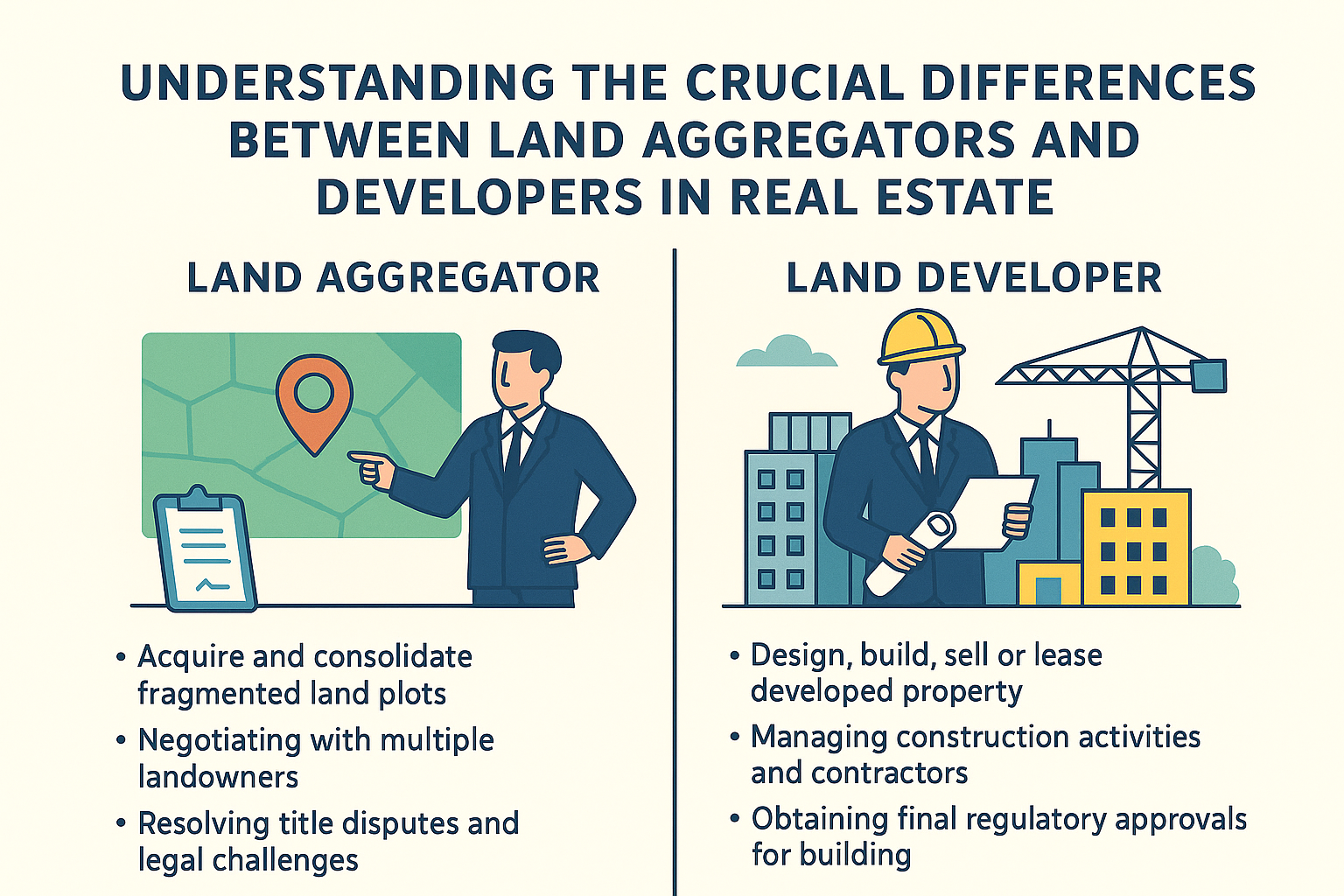
What’s a Land Aggregator Anyway?
Think of a land aggregator like a puzzle master. Cities and towns have lots of small landowners, each holding a piece of land here and there. For big projects, you need one big piece - like merging many small puzzles pieces into one giant puzzle. That’s where a land aggregator steps in.
What they do:
-
Find and buy up small chunks of land from lots of owners.
-
Handle the paperwork and make sure all the land titles are clear (because land ownership can sometimes be messy).
-
Bundle it all together into one big plot that’s ready for development.
In short, land aggregators make sure developers have a smooth path to get the land they need without headaches.
What About a Land Developer?
Once the land aggregator has done their job, the land developer takes the spotlight. They’re the builders and creators. Their job is to:
-
Plan what will go on the land - like homes, offices, malls or factories.
-
Manage all the construction work - hiring architects, laborers, contractors.
-
Get all the necessary building permissions.
-
Market the finished properties and sell or rent them out.
So basically, if the land aggregator prepares the canvas, the land developer paints the picture.
What’s the Big Difference?
| What They Do |
Land Aggregator |
Land Developer |
| Main Job |
Collecting and combining land parcels |
Building and selling/renting developed properties |
| Who They Work With |
Landowners, government offices |
Contractors, architects, buyers |
| When They Step In |
Before any construction |
After land is ready for building |
| How They Make Money |
By selling or leasing the aggregated land |
By selling or leasing buildings and projects |
| Role in Construction |
Little to none |
Manages full construction process |
Why Both Are Important
In the real estate game, one can’t really do without the other. Without aggregators, developers would struggle to find big enough land parcels. Without developers, aggregated land just sits there unused and unproductive.
They’re like teammates - the aggregator sets the stage, and the developer brings the show to life.
What Challenges Do They Face?
Both roles have their share of troubles:
-
Finding and clearing titles on lands can be tough for aggregators.
-
Developers face risks with construction costs, timelines, and market demand.
-
Navigating government rules and approvals is something both must handle carefully.
Wrapping It Up
Next time you see a new building or housing project, remember there’s a land aggregator and a land developer behind the scenes making it happen. Understanding their roles helps you get why big projects take time and coordination - and maybe even helps if you’re thinking of investing or working in real estate!